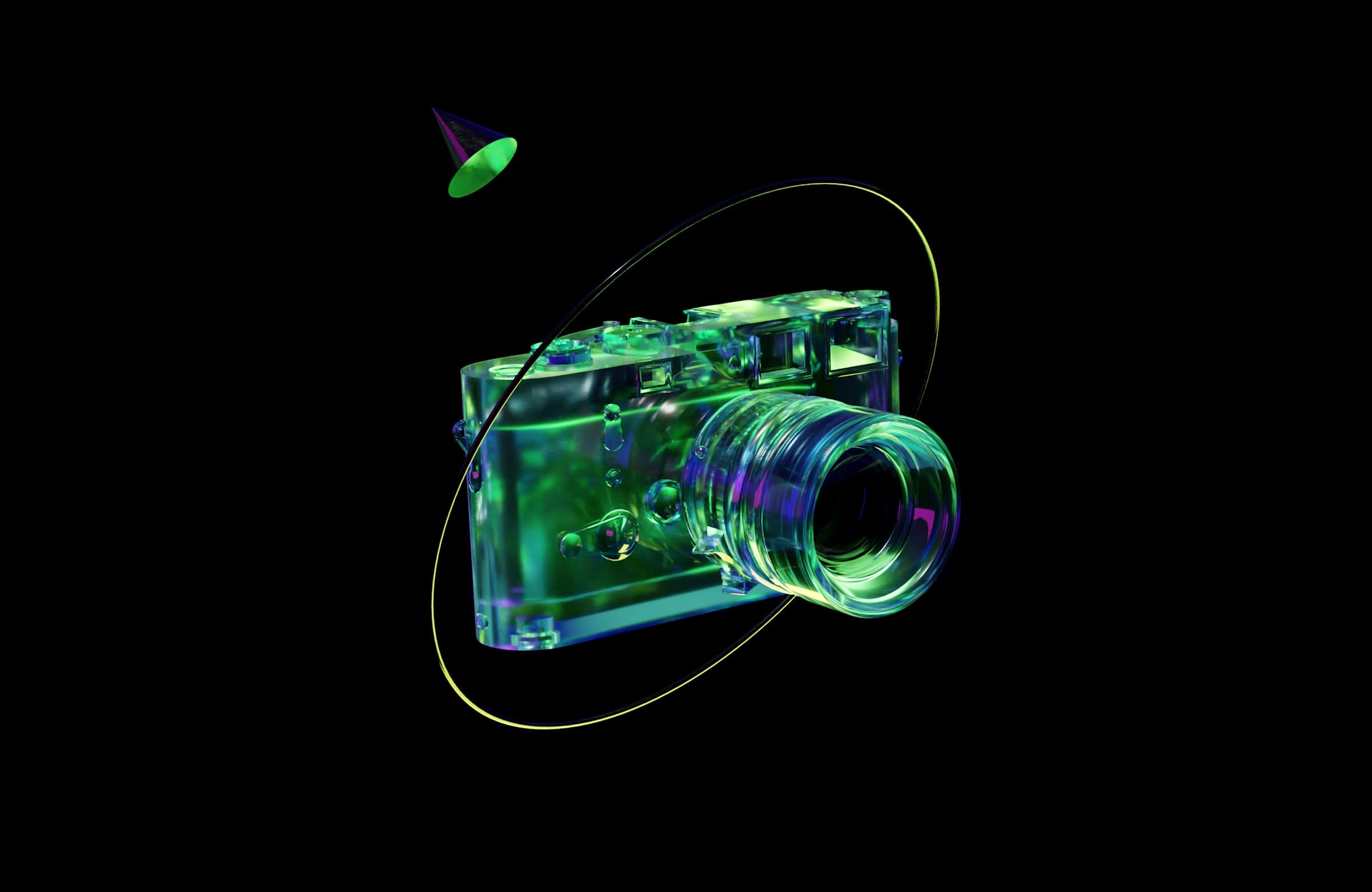
Everything, everywhere, all at once, in your pocket.
There was a time, not even that long ago, where going out meant grabbing three separate things off your desk. A phone that was just a phone. A music player that was just a music player. A camera that was just a camera. Each one did exactly one thing, and did it well, and that was the whole point.
Now it's all one slab of glass in your pocket and somehow everything got worse.
Digital cameras were kind of perfect for what they were. You'd bring one out specifically because you wanted to take photos. That was the intent. You weren't standing in the middle of a moment fumbling through apps and notifications to get to the camera; you just had a camera. Point, shoot, done.
And the photos had this quality to them that's hard to describe. Not technically better, not always, but more honest. A compact digital camera in 2007 gave you what the lens saw. No computational photography, no AI skin smoothing, no "scene optimization" that decides your sunset needs more orange than it actually had. Just the photo. Whatever came out, that's what it looked like.
Smartphone cameras now are technically incredible on paper, but they've gotten weird. Every photo goes through layers of processing before you even see it. Your phone decides what your face should look like, smooths your skin without asking, sharpens edges that weren't that sharp, HDRs everything into this hyper-real look that doesn't match what your eyes actually saw.
The other thing about having a dedicated camera was that photos felt like events. You took fewer of them. You thought about what you were pointing it at. A night out used to produce forty photos total, and you'd go through all of them the next day on your computer, and half of them would be blurry, and that was fine, it was part of it.
Same with camcorders. The footage was shaky, the audio was blown out every time someone laughed too loud, and nobody cared because it was real and felt like reliving the thing. Now everyone shoots 4K video on their phone, stabilized and color corrected in real time, and the footage sits in a camera roll forever, unwatched, taking up storage.
All of it meant something because someone made the deliberate choice to bring the thing and press record. It wasn't passive. You didn't just happen to be holding it. Now people take hundreds of photos of everything all the time and look at approximately none of them. The photos stopped being memories and started being content.
The iPod changed how people related to listening in a way that streaming completely reversed.
Even before the iPod, you'd carry music with you. A Discman in your bag with a CD case, or a Walkman with a cassette you made yourself; recording off the radio or dubbing from a friend's copy, labeling the spine in your own handwriting. The CD had a booklet you'd flip through on the bus. Liner notes, lyrics, artwork, sometimes weird little thank you messages from the band. The music was something you could hold, and that was part of what made it feel like yours.
Then the iPod came along and digitized all of that, but it still kept the core of it. You had a library. Your library. You built it yourself, song by song, album by album, whether you bought it on iTunes or ripped your CDs or got it from a friend or, you know, other methods. The point is it was yours. It lived on your device. It didn't need wifi. It didn't buffer. It didn't disappear because some label pulled their catalog.
And because you had to actively put music on there, you listened to it differently. You'd put an album on and just... listen to it. Front to back. The way it was meant to be heard. The transitions between tracks, the pacing, the arc of it. Artists spent months thinking about track order and it actually mattered because people experienced albums as complete things.
Streaming killed that. Not on purpose, just as a side effect of making everything available all the time. When you can play literally any song ever recorded, you don't sit with anything. You skip. Almost half of all songs on Spotify get skipped before they even finish. A quarter of listeners bail within the first five seconds. Five seconds. Artists have started frontloading their hooks into the opening bars because if you haven't grabbed someone by then, they're gone. The music itself has been reshaped by the economics of a skip button.
And you don't own any of it. You're renting access. Spotify could pull your favorite album tomorrow and it's just gone. Your playlists, all that curation you did, all of it depends on a subscription staying active and a licensing deal not expiring. People spent years building iTunes libraries that they actually possessed. Now you have a list of links to songs on someone else's server.
The other thing nobody talks about is battery. An iPod Nano lasted like 24 hours of continuous playback on a single charge. You could go a week without charging it. It weighed nothing. It had a click wheel that you could operate without looking at it, in your pocket, by feel. Try doing that with a touchscreen.
Phones back then were just phones. Small, durable, fit in any pocket. You could make calls and send texts. That was basically it and nobody felt like they were missing anything. Every brand had its own thing going on; different shapes, different button layouts, different ways of doing the same simple stuff. Some slid open, some flipped, some were just a solid little brick. You'd pick one because you liked how it felt in your hand or because it looked cool, not because of what apps it had. There were no apps. It was a phone.
Battery lasted days. Not hours, days. Some of these things could go one to two weeks on standby without seeing a charger. Even heavy users only plugged in twice a week. Drop it and it was fine. Drop it in water, pop the battery out, put it in rice, it was fine. The thing was borderline indestructible compared to the glass rectangles we carry around now in protective cases that cost forty bucks.
But the real thing about those phones was that when you put them away, they were away. You weren't reachable. You weren't scrolling anything. The phone was in your pocket being a phone, which means being nothing, which means you were just wherever you were, fully present, with whatever was in front of you. There was no pull. No feed. No reason to take it out unless someone called.
People say "but you can just not check your smartphone" and yeah, technically, in the same way you can just not eat the food sitting in front of you. The old phones didn't require willpower because there was nothing to resist.
Think about what that actually means for how you went through your day. You were at dinner and everyone was just... there. At the table. In the conversation. Nobody was "quickly checking something", nobody's eyes were drifting down to a screen every forty seconds. You were bored waiting for someone? You just stood there and were bored. Your mind wandered. You thought about stuff. Sometimes you struck up a conversation with a stranger because there was literally nothing else to do.
Texting was its own thing too. T9 on a number pad, pressing the 7 key four times to get an S. It was slow enough that you only texted when you actually had something to say. Nobody was firing off twelve messages to ask what someone's doing tonight; you'd just call. Thirty-second phone call, plans made, done. Now people have entire relationships in text threads that go on for hours without actually saying anything.
The phone did its job and then left you alone. That's a fundamentally different relationship with a device.
Three devices, three purposes, three completely separate experiences. And then the smartphone showed up and ate all of them. Camera, music player, phone, GPS, alarm clock, calculator, flashlight, notepad, calendar, game console; all of it collapsed into one thing. And everyone said it was amazing because of course they did. Carrying one thing instead of three? Four? Obviously better. Obviously more convenient.
And it was more convenient. Genuinely. Nobody's arguing that. But convenience has costs that don't show up on the spec sheet.
When your camera is also your phone, you're one swipe away from checking your email while you're supposed to be taking photos of your friend's birthday. When your music player is also your phone, a text notification cuts into the song and suddenly you're responding to messages instead of listening to the album. When your GPS is also your phone, an Instagram notification pops up at a red light and now you're scrolling through stories when you should be watching the road.
Every device used to be a closed system. Pick it up, do the thing, put it down. The iPod couldn't distract you with Twitter because it didn't have Twitter. The camera couldn't show you your ex's new post because it didn't know what Instagram was. Each device existed in its own context, and when you were using one, you were doing that thing and only that thing.
The smartphone destroyed all of those boundaries. Everything is one tap away from everything else, all the time. The result is that you're never fully doing any single thing. You're always half somewhere else. The concept of picking up a device to do one specific task and then putting it down basically doesn't exist anymore.
And there's something else that's harder to pin down. When every device did one thing, you had a different relationship with each one. Your iPod was your music thing. Your camera was your photo thing. Your phone was your people thing. They had identities. You picked one up and your brain shifted into that mode. The smartphone doesn't have a mode. It's every mode at once, which means it's no mode at all. You're never in "music mode" or "camera mode" because three seconds later a notification pulls you somewhere else entirely.
The thing I keep coming back to is that dedicated devices enforced a kind of intentionality that we don't have anymore. When you picked up a camera, you were choosing to take photos. When you put on headphones connected to an iPod, you were choosing to listen to music. When you opened your phone, you were choosing to talk to someone. Each action was deliberate because the tool only did one thing.
Now every interaction with your phone is a negotiation with yourself about what you're actually going to do. You pick it up to check the time and twenty minutes later you're watching a video about how soap is made. The average person checks their phone 352 times a day now. That's once every two minutes and forty three seconds. In 2019 it was 96. It nearly quadrupled. There's no intentionality left. The device is a portal to everything, which functionally means it's a portal to whatever grabs your attention first, which is almost never the thing you picked it up for.
And look, I'm not saying we should go back. You can't put this stuff back in the box. The smartphone won because it's genuinely more practical, and nobody's going to start carrying three devices again for the sake of being more present. That ship sailed. (Although, interestingly, dumbphone sales jumped 25% in 2025, and almost a third of Gen Z say they're interested in getting one. So maybe some people are trying to unsail that ship. We'll see how that goes.)
But it's worth noticing what we traded away. Not just the devices themselves, but the way they made you engage with things. The intentionality of picking up a single-purpose tool. The focus that came from a device that could only do one thing. The absence of distraction not as a discipline but as a default.
We gained convenience. We lost something that doesn't have a clean name but that you can feel if you're honest about it. That sense of doing one thing at a time, being in one place at a time, using a tool and then putting it down and being done. I miss that, honestly.
And before anyone says it, yes, I was actually around for this. Barely, but I caught the tail end of it. Don't come at me.